Top 6 Racing Drones in the USA for 2026
Published on Monday, January 26, 2026
Racing drones are purpose-built, high-performance quadcopters designed for speed, agility, and the immersive first-person view experience. In the USA they appeal to hobbyists, competitive pilots, and STEM learners because they combine adrenaline, technical customization, and an active community. Buyers prioritize low-latency FPV systems, durable lightweight frames, high power-to-weight motors, modular parts for quick repairs, and reliable battery and motor performance. The market in 2026 favors a mix of ready-to-fly models for newcomers and highly tunable frames for experienced pilots, with attention to compliance requirements like FAA Remote ID and local flying rules. Whether you want to race competitively, practice on simulators, or build and tune your own craft, the top options balance speed, durability, and serviceable components so you spend more time flying and less time fixing.
Top Picks Summary
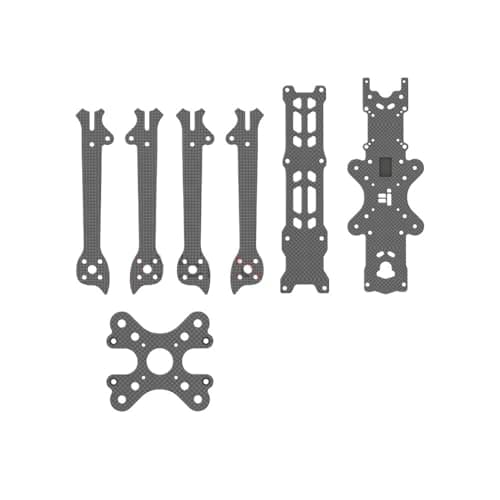
The iFlight Nazgul5 V3 stands out in the FPV drone market due to its lightweight design and superior flight performance. This drone features a durable carbon fiber frame and is equipped with powerful motors for exceptional acceleration and speed. Its user-friendly assembly and configuration options make it ideal for both beginners and experienced pilots. With its advanced FPV capabilities, the Nazgul5 V3 ensures a thrilling and immersive flying experience.
Why Racing Drones Matter: Benefits Backed by Research
Scientific and educational research shows that flying and building racing drones supports practical skills, cognitive development, and safe operating habits. Studies in human factors and educational technology report improvements in spatial awareness, hand-eye coordination, and problem solving when learners engage with drone flight and construction. Research on simulation training and progressive skill development demonstrates reduced crash rates and faster skill acquisition. Engineering and aerodynamics studies also inform better battery management and frame design, which translates into longer flights and safer handling for pilots.
Hands-on drone building and tuning reinforces STEM concepts such as electronics, aerodynamics, and systems thinking.
FPV flight practice and simulator training improve reaction times and spatial reasoning, making pilots safer and more effective.
Incremental training reduces accident rates: pilots who practice in simulators and controlled environments crash less and learn faster.
Ongoing engineering research into batteries, motors, and propeller efficiency directly improves flight time and reliability for racing setups.
Structured club and competitive environments promote responsible flying, maintenance habits, and adherence to regulations.
Frequently Asked Questions
Which racing drone should I buy for beginners?
BetaFPV Meteor65 Pro is the easiest pick for beginners because it’s designed for both beginners and experienced pilots, with lightweight portability and powerful brushless motors, and it has a 4.5 average rating.
Does DJI Avata Pro-View Combo include a camera?
Yes—DJI Avata Pro-View Combo includes a 1080p HD camera, plus first-person view capabilities, and it has an average rating of 4.8.
How does the BetaFPV Meteor65 Pro price compare?
BetaFPV Meteor65 Pro costs $104.99 USDand gives lightweight portability plus powerful brushless motors and compatibility with various FPV setups, while iFlight Nazgul5 V3 is listed without a price here and DJI Avata Pro-View Combo is $1,099.00 USD
Is iFlight Nazgul5 V3 durable enough for crashes?
iFlight Nazgul5 V3 uses a durable carbon fiber frame for rugged flight, has an average rating of 4.7, and the only stated warranty duration information isn’t provided in the listing.
Conclusion
These top 6 racing drones represent the best balance of speed, durability, and value for pilots in the USA in 2026. We hope you found a model that matches your experience level and racing goals. Use the site search to refine by price, skill level, or build type, or expand your search to accessories, parts, and local racing leagues to find the perfect setup.