

Best Mixed Reality Haptic Feedback Devices in the USA — Top 7 for 2026
Published on Thursday, February 26, 2026
Mixed Reality Haptic Feedback Devices provide tactile sensations that mimic physical interactions in a virtual space, enhancing immersion and user experience. In the United States, the appeal of these sophisticated devices is soaring as technology continues to blur the lines between the virtual and physical worlds. Gamers, developers, enterprise trainers, and technology enthusiasts are increasingly embracing mixed reality to create engaging experiences that stimulate the senses. With the added benefit of simulating touch, these devices are not just entertainment accessories but transformative tools for education, simulation-based training, remote collaboration, rehabilitation, and industrial design. Consumer preference in the USA favors solutions that combine realistic force or vibrotactile feedback, reliable motion tracking, comfortable wear for long sessions, strong developer tools and platform compatibility, and clear value for purpose—from high-end enterprise systems to accessible consumer options.
Top Picks Summary
HaptX Gloves G1
HaptX Gloves G1 are recognized for their pioneering haptic technology, offering realistic touch sensations that make virtual interactions feel tangible. The gloves utilize microfluidic actuators to provide precise feedback specific to the user's interactions within virtual environments, enhancing training and simulation experiences. With a focus on high-fidelity touch and motion capture, they are ideal for industries requiring detailed tactile feedback, such as robotics, healthcare, and gaming. This level of immersion sets HaptX apart in the rapidly evolving VR landscape.

SenseGlove Nova
The SenseGlove Nova stands out with its innovative force feedback and haptic feedback systems, providing an unparalleled sense of immersion in virtual reality experiences. Featuring a lightweight design, it ensures comfort during long use sessions, while its advanced tracking capabilities make it suitable for various applications from gaming to training simulations. Additionally, the Nova's user-friendly interface allows quick integration with existing VR setups. This unique combination of features makes it a popular choice for developers and users alike.

$6,000 – $8,000
bHaptics TactSuit X40
The bHaptics TactSuit X40 is a best-in-class full-body haptic suit for mixed reality, offering 40 spatialized actuators that provide broad, immersive vibration across torso and limbs with a favorable price-per-actuator for studios and prosumers. It prioritizes whole-body coverage and an extensive content ecosystem over the finger-level force rendering of Contact CI Maestro and the precision tracking of Manus, making it a cost-effective route to large-scale bodily immersion that complements, rather than replaces, glove-based solutions like the TactGlove.

Manus Prime 3 Haptic
The Manus Prime 3 Haptic is a market-leading hand and finger solution for mixed reality, combining high-precision finger tracking with integrated haptic modules and a mature developer SDK that accelerates enterprise integration. Technically it delivers superior motion capture accuracy and low-latency wireless performance compared with bHaptics' gloves, and while typically more expensive than the TactGlove it offers a stronger turnkey option for applications where tracking fidelity and software tooling are the priority.

$2,000 – $3,500
Teslasuit Glove
Teslasuit Glove distinguishes itself with cutting-edge technology that combines motion capture and biometry with haptic feedback in a single device. This innovative approach not only enhances user interactivity within virtual environments but also allows for real-time monitoring of users' physiological responses in various training scenarios. The gloves are designed for both entertainment and professional training, making them a versatile tool for developers and enterprises. Given its comprehensive feature set, the Teslasuit Glove sets a new benchmark in the haptic technology domain.

$8,000 – $12,000
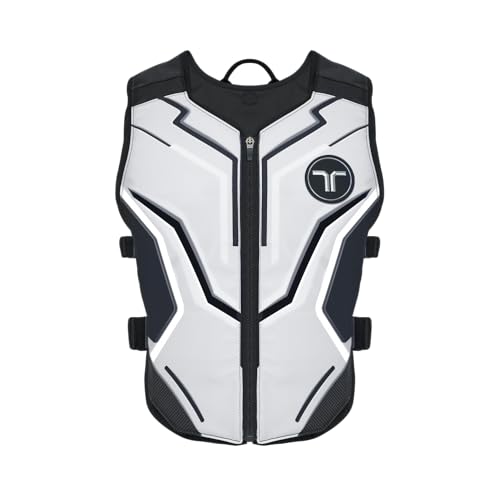
bHaptics TactGlove
The bHaptics TactGlove is best-in-class among lightweight, consumer-focused haptic gloves, delivering fingertip and hand-region vibrotactile feedback with a modular, easy-to-deploy design and very competitive pricing for mixed reality gaming and training. It trades off the kinesthetic force realism of Contact CI Maestro for affordability and simplicity, and pairs naturally with the TactSuit X40 when projects need a balanced combination of detailed touch cues and full-body sensation.
Contact CI Maestro
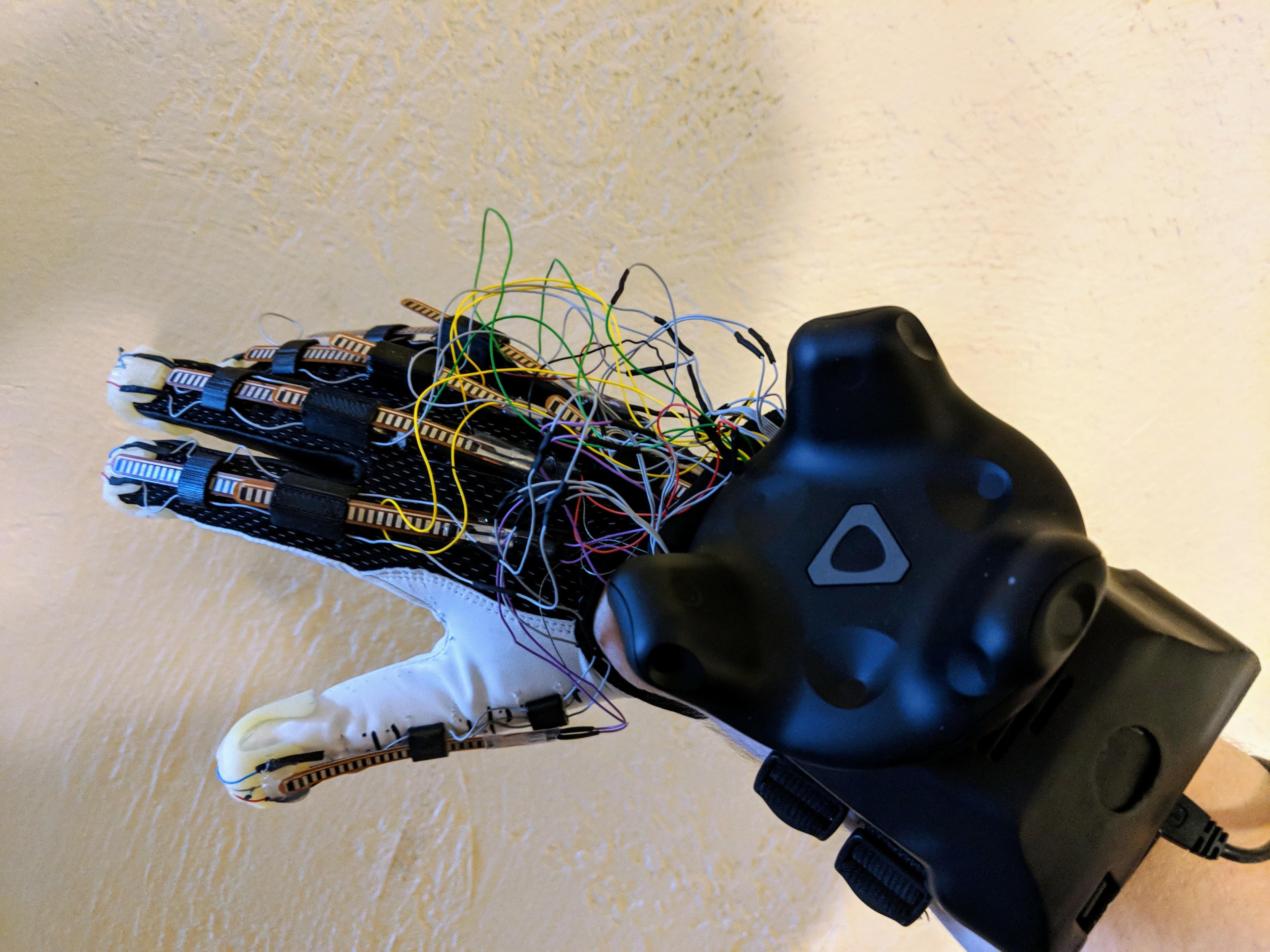
The Contact CI Maestro is a market-leading force-feedback glove that reproduces realistic grasping and resistance in mixed reality through articulated kinesthetic actuation, making it the go-to choice for high-fidelity training, simulation, and design validation where true force rendering matters. Its technical realism and physics-driven feedback outclass vibration-only systems like bHaptics' offerings, but this comes with higher hardware complexity and cost, so Maestro is best reserved for scenarios where mechanical force feedback delivers measurable value.
$5,000 – $10,000
What Research and Evidence Say About Haptic Feedback
Scientific and industry research has documented that tactile feedback in mixed reality improves user presence, motor learning, and task performance compared with visual-only systems. Studies across human-computer interaction, cognitive science, and rehabilitation show that well-timed haptic cues strengthen multisensory integration, reduce error rates in simulated tasks, and speed skill acquisition. Research also highlights trade-offs: higher fidelity force feedback often requires more complex hardware and power, while vibrotactile systems deliver lower cost, lower-weight options that still increase immersion and user satisfaction.
Improved presence and immersion: multimodal feedback (touch plus vision) raises subjective presence scores in VR and MR experiments.
Better training outcomes: haptic-enhanced simulations accelerate procedural learning and retention for medical, industrial, and safety training.
Reduced cognitive load for some tasks: tactile cues can direct attention and reduce visual clutter, improving efficiency in complex interfaces.
Trade-offs of fidelity: force-feedback gloves deliver realistic object interaction but at higher cost and complexity; vibrotactile suits scale well for full-body sensation.
Latency and synchronization matter: human perception is sensitive to delays, so low-latency systems produce stronger effects and fewer simulator-sickness issues.
Frequently Asked Questions
Which should I buy for mixed reality haptics, HaptX or bHaptics?
Choose bHaptics TactSuit X40 if you want full-body coverage, since it has 40 spatialized actuators for directional, body-mapped vibration across torso and limbs; it’s rated 4.6.
Does bHaptics TactSuit X40 have directional body-mapped haptics?
Yes—bHaptics TactSuit X40 includes 40 independent vibrotactile actuators that deliver directional, body-mapped feedback, plus a wireless battery-powered design for untethered mixed-reality sessions.
Is bHaptics TactSuit X40 worth the $614 price?
At $614.00 USDthe bHaptics TactSuit X40 gives 40 independent vibrotactile actuators for broad torso-and-limb vibration, with wireless battery power and broad SDK/middleware support for Unity and Unreal.
How comfortable is the SenseGlove Nova for longer VR sessions?
SenseGlove Nova is designed for comfort during long use sessions with a lightweight build, and it’s rated 4.5 for its force feedback and haptic feedback.
Conclusion
In the USA market for 2026, mixed reality haptic feedback devices span from high-fidelity force-feedback gloves to full-body vibrotactile suits and hybrid developer tools. The seven devices highlighted here — HaptX Gloves G1, SenseGlove Nova, bHaptics TactSuit X40, Manus Prime 3 Haptic, Teslasuit Glove, bHaptics TactGlove, and Contact CI Maestro — represent the range of capabilities available today. For high-fidelity, enterprise-grade touch and realistic force feedback, the HaptX Gloves G1 stand out as the best overall choice on this page, while SenseGlove Nova is an excellent alternative for developer-focused force feedback, bHaptics TactSuit X40 provides scalable full-body vibrotactile immersion, Manus Prime 3 Haptic blends accurate tracking with haptics, Teslasuit Glove is attractive for integrated suit ecosystems and training applications, bHaptics TactGlove offers a budget-friendly hand feedback option, and Contact CI Maestro targets precision contact-based haptics for specialized use cases. We hope you found what you were looking for. If you want to narrow the results by price, use case, or compatibility, or expand your search to include related VR AR devices, use the site search to refine or broaden your options.