

Top 7 25GBASE-SR Controllers in the USA for 2026
Published on Thursday, February 26, 2026
25GBASE-SR controllers are rapidly gaining popularity in the United States for short-range, high-density data center interconnects. Designed for multimode fiber and SFP28 form factors, these controllers deliver 25 Gigabit Ethernet performance optimized for rack-to-rack and top-of-rack connections. US enterprises, hyperscalers, and cloud providers favor 25GBASE-SR because it balances high throughput, low latency, and efficient space utilization while lowering cost per gigabit compared with higher-speed optics. Buyers often prioritize compatibility with existing multimode fiber plants, robust offload capabilities such as RDMA and SR-IOV, and strong driver and ecosystem support. As demand for bandwidth from AI, distributed storage, virtualization, and edge workloads continues to rise across the US technology landscape, 25GBASE-SR controllers are an attractive, future-ready choice for organizations focused on performance, scalability, and efficient port density.
Top Picks Summary
Mellanox MCX512A-ACAT ConnectX-5 EN Dual-Port 25GbE SFP28 Adapter
The Mellanox ConnectX-5 EN (MCX512A-ACAT) is widely regarded for its low-latency RDMA capabilities and rich offload feature set, making it a best-in-class choice for 25GBASE-SR controller deployments where CPU efficiency and RoCE performance matter. Compared with the Intel and Broadcom entries on this list, ConnectX-5 often delivers superior latency and RDMA density per dollar while benefiting from tight integration with the NVIDIA/Mellanox software stack for data center acceleration.

Intel XXV710-DA2 25GbE SFP28 Network Adapter
The Intel XXV710-DA2 is a mainstream 25GbE SFP28 adapter that excels in broad OS and hypervisor compatibility, mature drivers and predictable support, which lowers operational risk for 25GBASE-SR controller rollouts. Financially it can offer lower total cost of ownership through wide OEM adoption and plentiful software ecosystem support, though it trades some of Mellanox's ultra-low latency and RDMA specialization for greater interoperability.

Broadcom BCM57304 NetXtreme-E 25GbE SFP28
Broadcom's BCM57304 NetXtreme-E line brings enterprise-grade offloads and close integration with Broadcom switch silicon, delivering stable performance for 25GBASE-SR controller environments that run large-scale, mixed-vendor fabrics. Technically it stands out for consistent firmware and feature parity in heterogeneous data centers, and financially it can be advantageous where customers already standardize on Broadcom ASIC-based switching to reduce cross-vendor complexity.
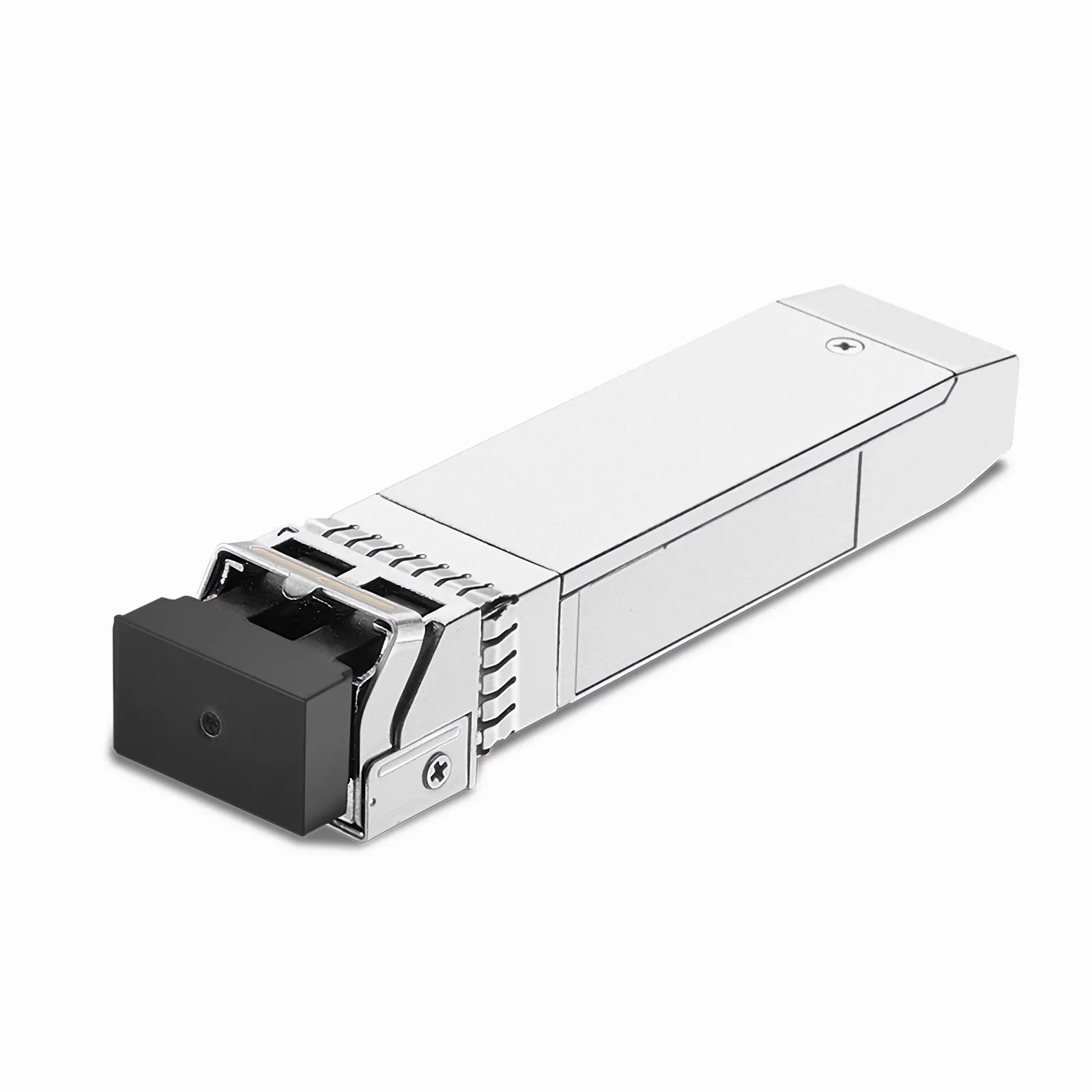
Cisco UCS VIC 1477 25G SFP28
The Cisco UCS VIC 1477 is an OEM-optimized 25G SFP28 controller offering deep integration with Cisco UCS servers and Nexus fabrics, simplifying management and fabric convergence for 25GBASE-SR environments. While it commands a premium price compared with commodity adapters, its value comes from unified management, SAN/iSCSI convergence features and predictable behavior inside Cisco-centric infrastructures.

Mellanox ConnectX-6 Dx
The NVIDIA ConnectX-6 Dx (MCX621102AN-ADAT) represents a market-leading, future-proof 25GbE controller with advanced offloads, enhanced virtualization and hardware crypto acceleration that reduce host CPU load for 25GBASE-SR use cases. Compared to ConnectX-5 and Intel options, ConnectX-6 Dx provides higher programmability and additional security/acceleration features, justifying a higher unit cost for deployments that need maximum throughput and feature density.

HPE Ethernet 10/25Gb 2-port 621SFP28 Adapter
The HPE Ethernet 10/25Gb 2-port 621SFP28 adapter is optimized for HPE ProLiant ecosystems, offering a practical balance of price, vendor support and certified compatibility for 25GBASE-SR controller projects. It may not match the raw RDMA or offload breadth of NVIDIA or Mellanox silicon, but it reduces integration and lifetime support costs for organizations standardized on HPE hardware.

Juniper Networks QFX5120-48Y 25GbE Switch
The Juniper QFX5120-48Y is a high-density 25GbE switch that serves as a market leader for fabric-side support of 25GBASE-SR controller deployments thanks to low-latency ASICs and modern automation/telemetry integration. Unlike endpoint NICs, the QFX5120 delivers the switching scale and per-port economics required for leaf-spine architectures and can materially lower network port cost at scale while delivering features that complement the endpoint controllers on this list.

Research and evidence behind 25GBASE-SR benefits
Industry standards, lab benchmarks, and field studies show that 25GBASE-SR provides a compelling combination of performance and efficiency for short-reach links in modern data centers. The IEEE 802.3by standard established 25 Gigabit Ethernet as a standardized option for single-lane 25G operation, and subsequent vendor and independent benchmarks demonstrate improved cost per port, power efficiency, and density when migrating from 10G to 25G at the top of rack. Research also highlights the advantages of advanced NIC offloads and RDMA for reducing CPU overhead and improving application throughput, which is especially relevant for cloud, storage, and AI inference workloads.
IEEE 802.3by standardization enabled broad interoperability for 25GBASE-SR over multimode fiber, lowering integration risk.
Benchmarks show 25G ports deliver higher bandwidth density and lower cost per gigabit compared with 10G while often using similar cabling infrastructure.
Studies of RDMA and hardware offloads demonstrate measurable reductions in CPU usage and latency for storage and distributed compute workloads.
Power and thermal assessments indicate many modern 25G controllers offer improved energy efficiency per gigabit versus previous generation adapters, supporting higher port counts in constrained racks.
Frequently Asked Questions
Which 25GBASE-SR controller should I buy for RoCE servers?
Mellanox ConnectX-5 EN MCX512A-ACAT 25GbE SFP28 is a strong fit, since it’s a dual-port 25GbE SFP28 NIC optimized for RoCE and RDMA low-latency workloads and has a 4.7 average rating.
What exact capability does the MCX512A-ACAT support?
The Mellanox ConnectX-5 EN MCX512A-ACAT offers dual-port 25GbE SFP28 and is optimized for RoCE and RDMA low-latency workloads, plus advanced offloads like VXLAN/GENEVE and SR-IOV.
Is the Intel XXV710-DA2 worth its higher price?
Intel XXV710-DA2 25GbE SFP28 is listed at $377.88 with a 4.6 average rating, and it includes SR-IOV and DPDK acceleration, plus enterprise-class drivers and firmware tools for lifecycle management.
Are the Broadcom BCM57304 and Mellanox MCX512A similar choices?
Broadcom BCM57304 NetXtreme-E 25GbE SFP28 targets enterprise-grade hardware offloads for virtualization and mixed-vendor fabric stability, while Mellanox MCX512A-ACAT is RDMA/RoCE low-latency focused; Broadcom’s average rating is 4.4.
Conclusion
This selection highlights seven leading 25GBASE-SR options suited to US data centers and enterprise deployments: Mellanox ConnectX-5 EN MCX512A-ACAT 25GbE SFP28, Intel XXV710-DA2 25GbE SFP28 Network Adapter, Broadcom BCM57304 NetXtreme-E 25GbE SFP28, Cisco UCS VIC 1477 25G SFP28, NVIDIA ConnectX-6 Dx EN MCX621102AN-ADAT 25GbE, HPE Ethernet 10/25Gb 2-port 621SFP28 Adapter, and Juniper Networks QFX5120-48Y 25GbE Switch. Among these strong choices, the NVIDIA ConnectX-6 Dx stands out for its modern architecture, advanced offloads, and broad software and ecosystem support, making it a leading pick for demanding low-latency and high-density deployments. We hope this page helped you find what you were looking for. You can refine or expand your search by adjusting filters for vendor, form factor, offload features, or power and port density to match your deployment needs.