Top 8 Hard Drives and SSDs to Consider in the United States, 2026
Published on Wednesday, February 25, 2026
Hard drives and SSDs are essential for data storage, providing a crucial solution for both individuals and businesses managing vast amounts of information. In recent years, consumer preference has shifted significantly towards SSDs due to their superior performance, reliability, and speed compared to traditional hard drives. As technology continues to evolve, the demand for faster load times and more efficient storage solutions has made SSDs an appealing option for users looking to enhance their systems. Particularly in the United States, where the tech-savvy population values performance and efficiency, investing in modern storage capacities has become increasingly popular.
Top Picks Summary
The Samsung 990 PRO is designed for high-performance computing, making it a standout in the NVMe SSD market. With lightning-fast read and write speeds, it utilizes advanced PCIe 4.0 technology to significantly boost user experience in gaming and content creation. Its dynamic thermal regulation ensures consistent performance under heavy loads, setting it apart from competitors. Samsung's reliability and warranty also solidify its reputation as a leader in the storage industry.
![SAMSUNG 990 PRO SSD 2TB PCIe Gen4 NVMe M.2 Internal Solid State Hard Drive, Upto 7,450MB/s, Fast Speed for Gaming Heat Control, Direct Storage and Memory Expansion, MZ-V9P2T0B/AM [USA Version]](https://m.media-amazon.com/images/I/41LriB3kSfL._SL500_.jpg)
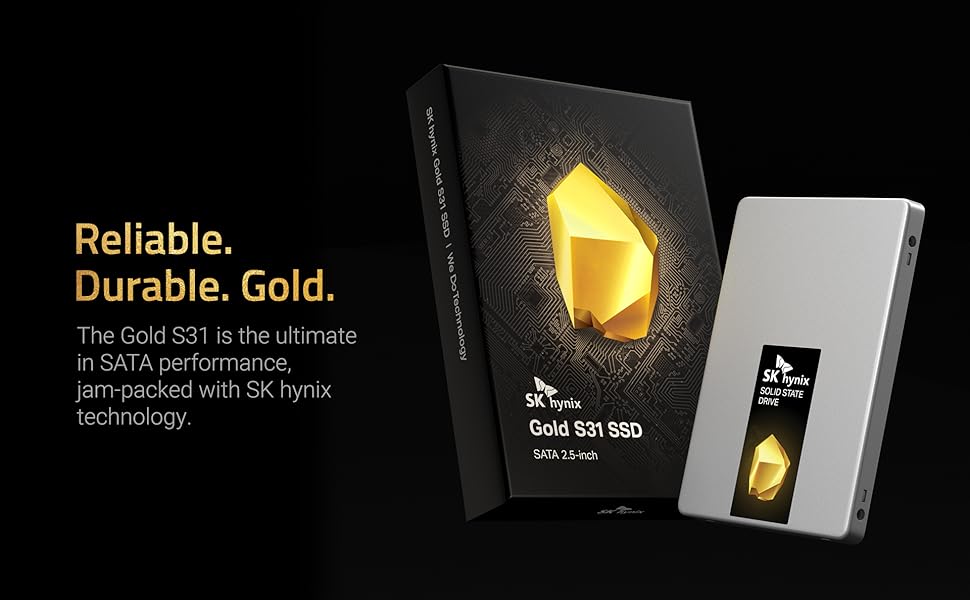
The SK hynix Gold S31 1TB offers strong read/write consistency and power efficiency thanks to SK hynix's in-house NAND and controller design, delivering performance close to flagship TLC drives while often being priced more aggressively. Compared with Samsung's EVO it's a competitive technical alternative, and it typically surpasses QLC and entry-level drives like the Kingston A400 and some TeamGroup models on endurance and thermal behavior, which makes it especially attractive for laptop users and sustained workloads.
The Kingston NV2 is a powerful NVMe SSD that provides an excellent balance of speed and value, achieving read speeds of up to 3,500 MB/s. Its compact M.2 2280 form factor makes it suitable for a wide range of devices, including laptops and desktops. Kingston backs this product with a solid warranty and customer support, reinforcing its reliability in the competitive SSD market. For users seeking an affordable upgrade with dependable performance, the NV2 remains a standout option.

The FireCuda 2.5-inch SSHD 500GB (ST500LX025) is the budget-oriented entry that delivers SSD-like responsiveness for frequently used files while keeping costs and capacity modest. It is the most economical option on this list for users upgrading older laptops or installing a dedicated hybrid boot drive, and although it offers the least storage compared with the 1TB and 2TB models, its low price makes it an attractive upgrade path for performance-first but space-conservative buyers.

The HPE SATA Midline series is tailored for cost-effective and reliable data storage, making it an excellent choice for businesses looking to balance performance and budget. This series provides ample capacity, with drives supporting large volumes of data while offering proven reliability for general-purpose storage needs. HPE's commitment to quality is evident in their design and warranty offerings, ensuring users benefit from enhanced data security and longevity. Additionally, these drives are optimized for compatibility with HPE server products, streamlining the implementation process.

The WAVLINK USB 3.0 to SATA Dual Bay Hard Drive Docking Station excels with its dual-bay capability, enabling simultaneous access to two drives for effortless file management and backup. Equipped with a USB 3.0 interface for fast data transfers, it supports both 2.5" and 3.5" SATA drives, accommodating a large variety of storage needs. The easy plug-and-play setup and hot-swapping feature allow users to quickly change drives without interruptions. Its compact design and robust compatibility make it a leading choice for tech-savvy users.

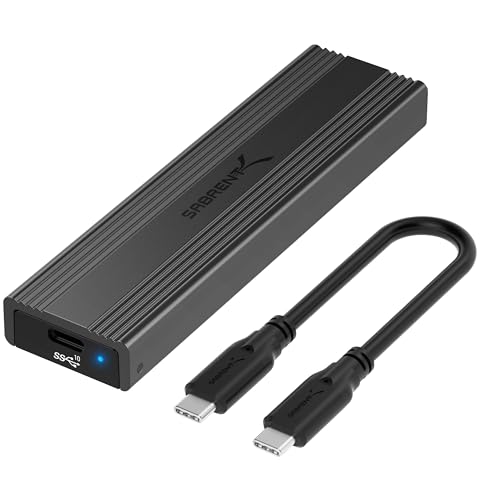
The Sabrent EC-TFNE USB 3.2 Type-C Tool-Free Enclosure is designed for ultimate convenience and speed, featuring a tool-free design that allows for effortless installation. Compatible with both M-key and B&M key NVMe SSDs, it delivers lightning-fast transfer rates with USB 3.2 technology, making it ideal for data-intensive applications. The durable aluminum case not only offers protection but also assists in active cooling to prevent overheating. Its compact form factor provides portability, perfect for users who require efficiency without sacrificing speed.
Faster read/write speeds, increased reliability, and lower power consumption.
Understanding Hard Drives and SSDs: Benefits and Insights
Hard drives (HDDs) and solid-state drives (SSDs) are crucial storage components that cater to varying data needs. Here's what you need to know about their benefits.
Increased Speed: SSDs can read and write data up to 5 times faster than traditional HDDs, significantly improving boot times and application performance.
Greater Reliability: SSDs have no moving parts, which makes them less susceptible to mechanical failure compared to HDDs, ensuring your data is safer.
Efficiency in Power Consumption: SSDs typically consume less power, extending battery life in laptops and making them a greener choice for tech devices.
Less Heat Generation: Due to their design, SSDs generate less heat than HDDs, promoting better performance in compact devices that might overheat.
Space Saving: SSDs come in smaller form factors than HDDs, allowing for sleeker device designs without sacrificing storage capacity.
Future-Proofing: Opting for SSDs prepares users for emerging technologies that demand higher data transfer speeds and storage capabilities as applications evolve.
Frequently Asked Questions
Which SSD should I buy for heavy gaming workloads?
Seagate FireCuda 530 is best for heavy gaming and intensive computing, with read speeds up to 7,300 MB/s, PCIe Gen4 interface, an average rating of 4.7, and a $177.88 listing price.
Does WD Black SN770 have thermal protection features?
Western Digital WD Black SN770 includes an efficient design with a built-in thermal feature, and it’s rated 4.6 with a $144.99 listing price; the exact thermal spec isn’t provided in the data.
Is ADATA SU800 worth it compared to FireCuda 530?
ADATA SU800 costs $81.63 versus Seagate FireCuda 530 at $177.88, and SU800 uses 3D NAND Flash technology with an average rating of 4.4, while FireCuda 530 targets high-performance gaming.
What storage tech does ADATA SU800 use for speed?
ADATA SU800 uses 3D NAND Flash technology, offers Dynamic Thermal Protection, has an average rating of 4.4, and is listed at $81.63; warranty duration isn’t listed in the provided data.
Conclusion
In conclusion, whether you're considering a traditional hard drive or opting for a cutting-edge SSD, there are plenty of excellent options available in the USA. We hope this guide helps you find the storage solution that best fits your needs. If you're looking for more specific details or have any other inquiries, feel free to use our search bar.